
Notes from the field
One season, one platform: running a mill's cane supply chain
Tens of thousands of cane farmers, a brutally seasonal calendar, and field staff working off the grid — unified on a single operational platform.
- Agriculture
- Supply Chain
- Manufacturing
- Field Ops
Field note
Agriculture Supply Chain
One season, one platform
A sugar mill's entire cane supply chain, unified.
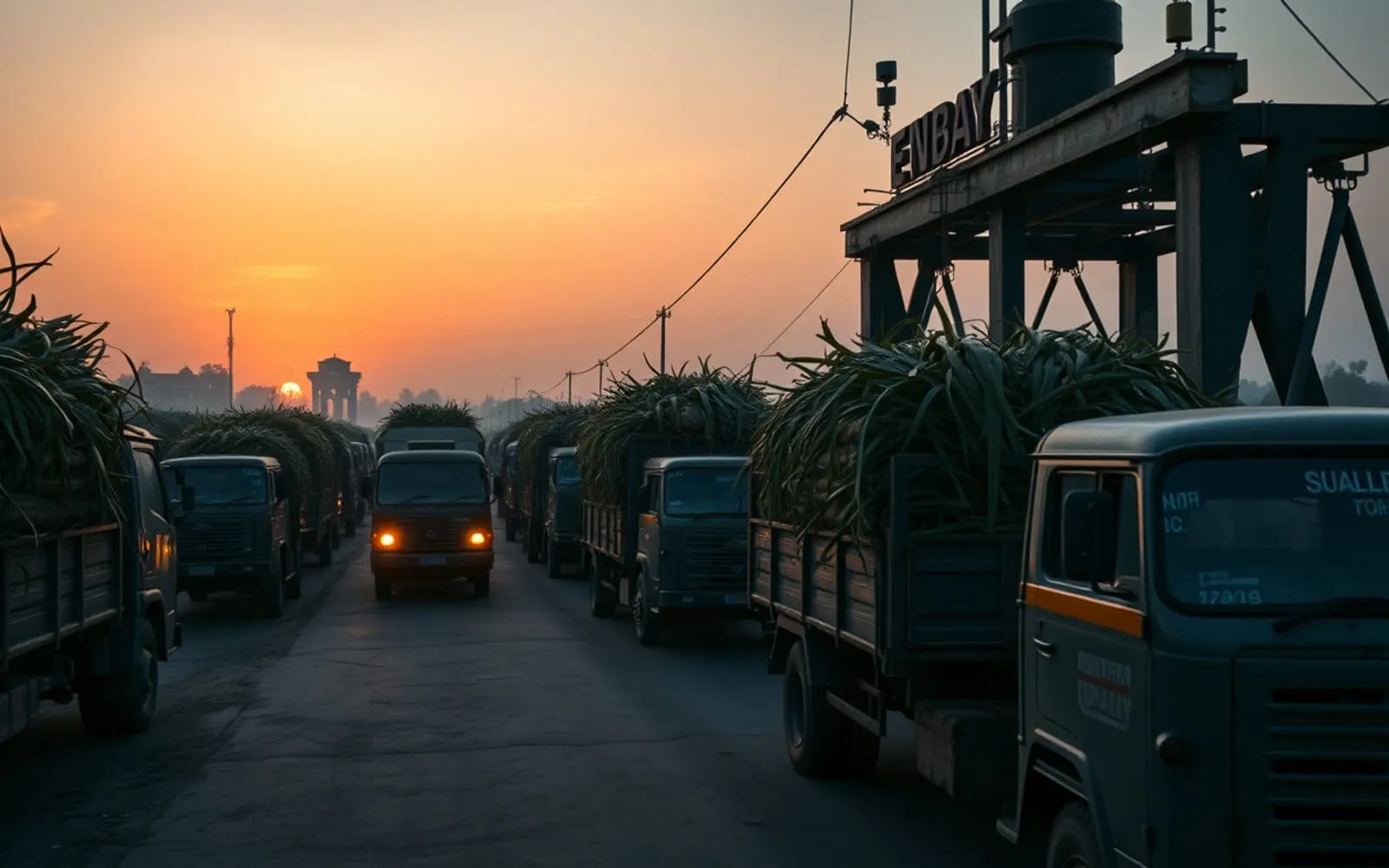
A sugar mill’s relationship with its growers is one of the most demanding supply chains in agriculture: tens of thousands of farmers, individual plots to survey and bond, a harvest calendar that turns on the weather, transport and weighbridge log to reconcile, and payments that have to be exactly right and on time — all compressed into a crushing season.
What we walked into
The work was scattered across registers, spreadsheets and a few disconnected tools. Plot boundaries didn’t line up with any canonical map; the harvest calendar lived in someone’s head; field staff captured data on paper in places with no signal; and three very different audiences — mill operations, field officers, and farmers — needed three very different views of the same truth. At peak season, any of these breaking is a direct hit to throughput and to farmer trust.
What we did
We unified it on one platform: a farmer-and-plot registry pinned to canonical geography, a harvest and bonding workflow, transport and weighbridge reconciliation, and a payments trail built to be audited. Each audience got a persona-scoped portal — operations, officer, and farmer — over the same data, with live operational views and maps for the control room. A built-in assistant answers the routine “where’s my payment / when’s my slot” questions so humans handle the exceptions.
What made it work
- Persona-scoped portals — one dataset, three role-appropriate experiences.
- Canonical plot + geography mapping — boundaries that reconcile with official maps.
- Offline-tolerant field capture — paper-free even past the edge of coverage.
- Auditable payments — every rupee traceable, because trust is the real product.
- Live operational views for the crushing-season control room.
Why we built it this way
Seasonality sets the bar: the platform has to be most reliable exactly when load is highest, so it’s engineered for the peak, not the demo. Scale demands normalised plot and farmer data, or nothing reconciles. The rural reality demands offline tolerance and local languages. Payments demand an audit trail by construction, not as an afterthought. And keeping it on infrastructure the mill controls keeps grower data — and commercial data — out of a third party’s hands.
Building something like this?
We'd rather talk specifics than slogans. Tell us what you're trying to build.
Talk to us